
For practitioners trained to manage chronic dizziness but never taught how to help reverse it.
Help clients recover when their test results don’t explain why they still have symptoms.
ENROLL NOWThe Steady Framework
The first practitioner training built specifically for neural circuit dizziness.
No matter your profession or how little dizziness training you’ve had, by the end of this self-paced training program, you’ll know exactly...
 exactly what to say
in what order
how to guide a patient
A chronically dizzy client can be one of the hardest people to sit across from.
Most practitioners don’t know how to help....
One week, something clicks. A client finally hears you and comes back saying she made it through the grocery store. And then the next week, a new client sits down with a three-page symptom list, five different diagnoses, and a folder of normal test results. And you have no idea where to start.
Meanwhile, you’ve seen the recovery stories. Clients who were told they’d never get better are now driving, traveling, and living their lives again.
So what are their practitioners doing that you’re not?
They might not necessarily be more skilled than you. And I bet you already have the skills, capabilities, and care you need. Maybe you’ve done training, read research, or even lived through dizziness yourself, so you can spot these clients when they walk in.
But knowing what’s going on and what to do about it are two entirely different things. Especially when...
You look at a client’s normal test results and wonder if they really rule everything out.
A client asks, “Will this ever go away?” and all you can offer is “We’ll help you manage it.
A client does everything you suggest for months and still feels stuck, and you’re not sure what to try next.
You refer a client out to be safe, and they come back weeks later more scared than before.
So you keep doing what feels safest: handing them a list of things to do to manage it or referring them out, hoping the next person will have the answer.
You probably know these clients can improve or even reverse their symptoms, but not knowing how to get them there is one of the most frustrating things.
“I was told for years I had anxiety... I was just never told I would get better from any of this.”
- Sarah (symptoms since age 14)
“What I needed to hear was that I wasn’t broken, that I didn’t need fixing, and that I was okay.”
- Alison
Here’s what most of us were never taught about chronic dizziness...
We were trained to look for what’s broken by running tests, finding the cause, and fixing or managing it. And if nothing shows up, we refer the client to someone who might find it.
That approach isn’t wrong, and it’s how we catch what truly needs medical care. But for most chronically dizzy clients, it’s only half the story. The exercises, trigger lists, and stress tips might help a little, but then progress stalls again.
That’s because chronic dizziness usually isn’t a hardware problem. It’s a software problem.
The inner ear is often fine, and so is the brain itself. What’s stuck is how the brain reads the signals it’s getting.
In fact, I have a colleague whose vestibular nerve was cut during surgery to remove a tumor, and she has zero symptoms. Her brain adapted, proving that damage alone doesn’t keep people dizzy.
Something usually starts it, like an inner ear infection, a migraine, a concussion, or a stressful stretch of life. That first bout of dizziness is real, and most of the time the brain adapts within weeks.
But sometimes the brain decides the dizziness is dangerous and goes on high alert. It stops updating how it reads balance signals, so normal sensations keep registering as dizziness.
Then the fear, avoidance, and constant checking that follow convince the brain the danger is real, and even when the original trigger is long gone, that alarm keeps the client dizzy.
Once you can see what’s keeping that alarm on, you’ll know how to explain it, where to start, and when a client truly needs a referral.
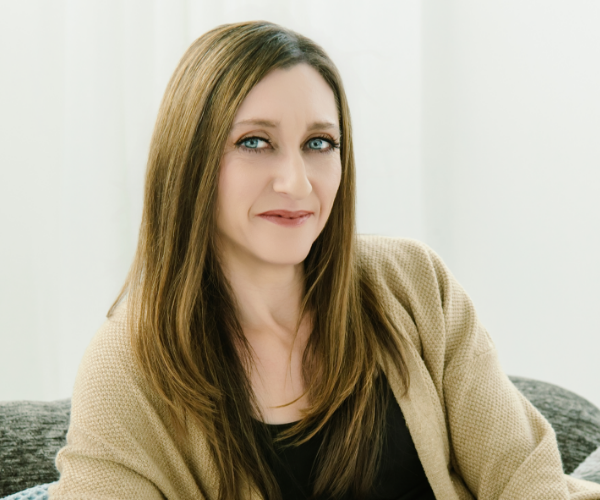
Hi, I’m Dr. Yonit Arthur, but most people call me Dr. Yo.
I’m a board-certified audiologist and vestibular specialist, certified in advanced vestibular rehabilitation and concussion treatment through the American Institute of Balance.
And early in my career, I was one of those providers who dreaded dizzy clients walking through the door.
I could help the people who needed me least by sending them for medication, surgery, or another test. But I couldn't help the ones who’d been dizzy for years and needed me most. It was so demoralizing that I eventually left audiology.
Then my mom started having vertigo spells, so I cracked open my old textbooks to help her, and soon people with chronic dizziness started finding me. They kept telling me why they thought they’d gotten sick, which was surprisingly something no one had ever asked them before.
That’s when it clicked that chronic dizziness is a brain-based problem, a lot like chronic pain.
So I pulled what I knew from audiology, chronic pain research, exposure work for anxiety and OCD, plus research on trauma and emotional awareness to build what my clients needed. And I put almost all of it on YouTube for free.
Today, more than 60,000 people follow my channel, and I’ve recorded 70+ full-length recovery stories while watching thousands of people recover.
But my coaches and I can’t reach everyone. I have to refer almost everyone who needs one-on-one help to other practitioners, and unfortunately there simply aren’t enough practitioners equipped to help them.
My goal is for people with chronic dizziness to get answers and help on Day 1 from the practitioner they already trust, so they can recover faster and suffer less.
Which is exactly why I built an evidence-informed, step-by-step way to help these clients recover...
Introducing The Steady Framework: Neural Circuit Dizziness for Practitioners
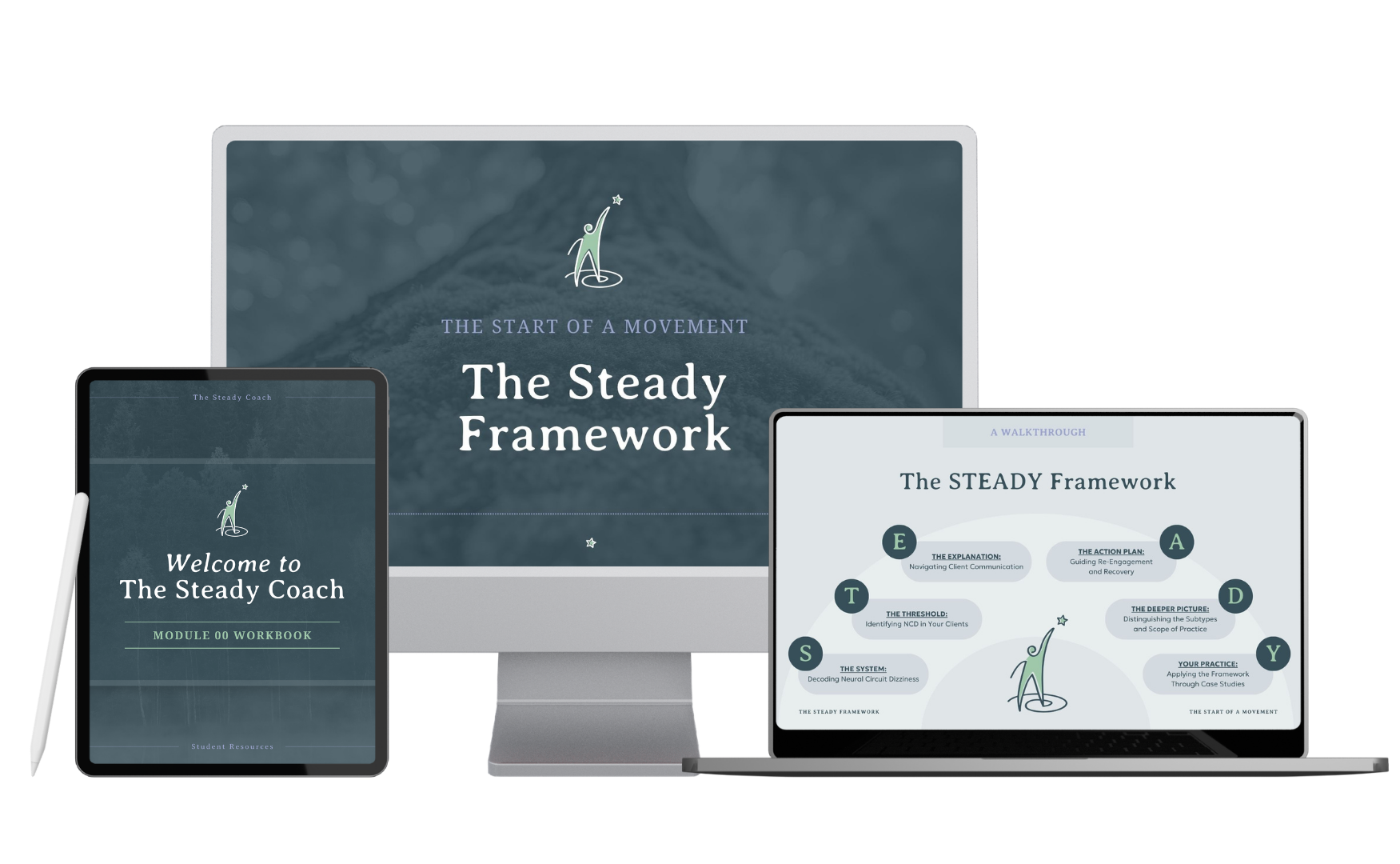
A complete, self-paced training program that gives you the science behind why your clients are still dizzy.
PLUS a step-by-step roadmap for helping them recover, within your scope of practice, licensed or not.
This is the dizziness training most of us were never given.
It follows six steps, one for each letter of STEADY, in the order you’ll use them with a real client...
Here’s what you’ll learn, step by step...
Module 1 · The System: Know Exactly Why Your Client Is Still Dizzy
This is the foundation for everything else. You’ll learn how the brain gets stuck in a fear loop after medical clearance, and how to explain it so any client can understand.
Module 2 · The Threshold: Know Who’s Ready and Who Needs a Referral
Start every client on solid ground. You’ll learn the red flags that mean “refer first,” and how to run an intake that builds trust from the very first question.
Module 3 · The Explanation: Know Exactly What to Say
This conversation is often the most powerful thing you’ll offer. You’ll learn language that lands as hope instead of dismissal, and how to answer the hardest questions clients ask.
Module 4 · The Action Plan: Help Clients Get Their Lives Back
This is where clients stop avoiding and start living again. You’ll learn how to guide somatic tracking for dizziness, build a step-by-step plan, and keep clients going through the dips.
Module 5 · The Deeper Picture: Know What to Do When a Client Is Still Stuck
Some clients do everything right and still don’t improve. You’ll learn the two patterns that usually explain why, and how to refer in a way that feels like genuine care.
Module 6 · Your Practice: Watch the Whole Framework in Action
Seeing it done teaches what no single lesson can. You’ll follow three real client cases from the first session to recovery or referral, with clips from real sessions.
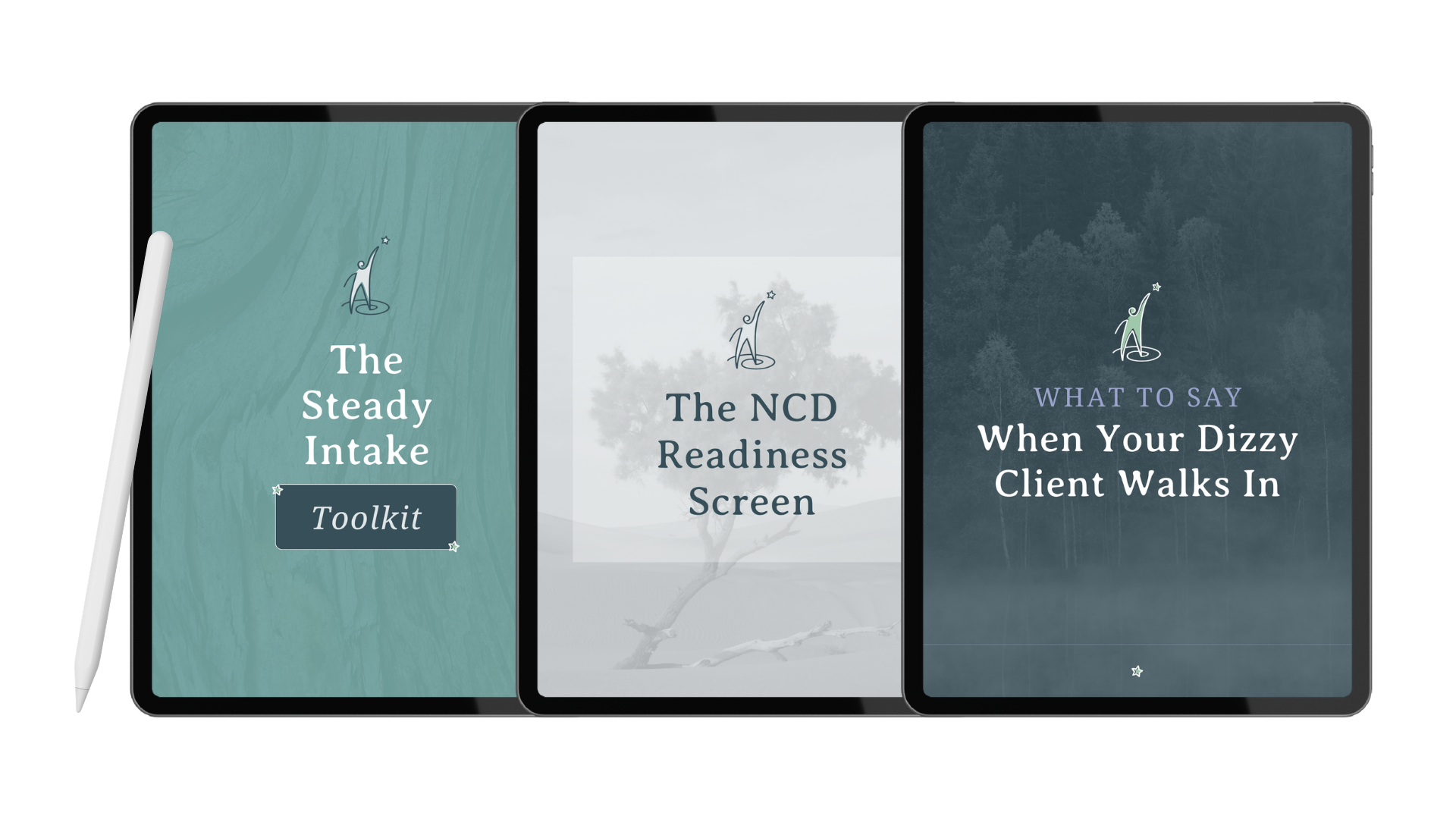
Every module comes with a toolkit of guides, scripts, and client handouts to use in session, plus lifetime access.
Skip the years of trial and error it took me to build this, and become the practitioner your community turns to for chronic dizziness.
I WANT TO HELP MY CLIENTS RECOVER“How are you relating to the vertigo? That simple question would have changed my trajectory.”
- Jodi
“Give somebody hope... and not treating us like we are broken and sick...”
- Marjorie
This is what recovery can look like for your clients too...
“At my worst, it was 24/7... Now I would say that I’m nearly normal. I have no restrictions in my life, and I feel joy every day.” - Megan (PPPD)
“Before I found you, my symptoms were a 10, sometimes an 11. Now my baseline is a one or a two.” - Alison (MdDS, symptoms for 10+ years)
“No one wants to cross that threshold in the medical community because they don’t want to give false hope, but it’s real hope. You can get better, and the brain is very adaptable. I’ve lived it.”- Jodi (post-concussion syndrome)
“My brain thought the sandy campsite was dangerous. But I proved it wrong.” - Heather
“I was sitting with 24/7 symptoms and almost constant despair, completely convinced I would never get better. Then I found you. Less than a year later, I was on the other side.” - anonymous
“I had PPPD and no doctor knew anything about it, including myself. Thanks to you, I regained my life.” - anonymous
Imagine the next time a dizzy client sits down across from you...
You look at their test results and know exactly what they do and don’t rule out, and what your next step is.
When they ask, “Will this ever go away?” you don’t default to “We’ll help you manage it” and instead you explain what’s happening in their brain, and watch their shoulders drop for the first time.
You ask about stress at the right moment, in the right words, and they open up instead of shutting down.
When a client stalls, you know what to try next. And when someone truly needs more than you can offer, you refer them with a clear reason and a warm handoff, knowing they’re going to the right person.
Now, the clients you used to dread become the ones you’re most excited to see.
“It all started with your program after a doctor told me it would never go away...”
- A therapist
“I just want to ask practitioners to learn about this, please.”
- Karen, a PT
Get the complete roadmap for helping your dizzy clients recover, for just $997.
Here's everything that's included:
- Six step-by-step modules, from the first intake to recovery or referral
- A toolkit for every module, with reference guides, scripts, and client handouts
- My intake and assessment set, including the Modified FIT for Dizziness
- Case studies with clips from real sessions
- Instant, self-paced lifetime access
It’s a complete roadmap you can use with the client already on your caseload, and with every dizzy client after that.
YES, I WANT TO HELP DIZZY CLIENTS RECOVER
PLUS, when you enroll, you’ll also get...
Bonus #1: The NCD Readiness Screen ($47 value)
A quick-reference decision guide and “Ready or Refer?” flowchart to keep next to your intake notes, so you know before the first session whether a client is ready for this work or needs a referral first.
Bonus #2: The Steady Intake Toolkit ($27 value)
The questionnaires I recommend sending every new client, plus a ready-to-send client message and notes on how to read every result, so you can start before your next appointment.
Bonus #3: A Spot on My Practitioner Referral List
Once you complete the course, I’ll add you to my internal list of practitioners trained in The Steady Framework. When people in my community need support, that’s the list I’ll refer them to.
Bonus #4: An Exclusive Live Q&A With Me
Join me for a one-time live Q&A just for course students. Bring your questions and your toughest client cases, and we’ll work through them together. [Date to be announced]
Here’s what happens next...
After you enroll, you’ll get an email right away with instructions to set up your account. From there, you’ll have instant access to every module and toolkit, so you can get started right away.
This course is for you if...
You have at least one chronically dizzy client you’re not sure how to help
You’re a psychologist, counselor, PT, audiologist, physician, nurse, or coach
You want to help clients recover, not just manage their symptoms
You’re open to talking with clients in a new way, even when it feels unfamiliar at first
Probably not for you if...
You want a quick protocol to hand clients without changing how you work with them
You’re working through dizziness yourself and don’t see clients. My Steady Start program and free course were made for you.
Questions you might have...
I’m not a vestibular specialist. Is this within my scope?
Is this evidence-based?
I only see a few dizzy clients. Is it worth it?
How much time will this take?
I already watch your YouTube videos. What’s different here?
Does this course offer CEUs?
Can I get a refund?
You can keep guessing, or you can get the roadmap...
You can keep referring out and hoping the next person has the answer. Or you can know exactly what to say, where to start, and when a referral is truly needed.
Because a dizzy client’s brain isn’t broken. It’s stuck. And stuck is reversible. Your clients don’t need you to have every answer. They need someone steady enough to say, “This is what’s happening, and you can recover.”